Disasterology: July 2025

This newsletter is a compilation of recent disaster ~things~ that I think are cool, important, or otherwise of interest to people who are intrigued with disaster (broadly defined). There’s a little something for everyone!
She’s baaaaack!
I have spent the past month in southeast Louisiana with my students, where we popped into one disaster organization after another to hear about their work. I had hoped that on the 20-year anniversary of Katrina and the Levee Failure, I would have more positive things to say about emergency management in Louisiana, but, to be honest, things are rough right now. As one person we spoke with put it, “Louisiana is used to being fractured”. Bleak stuff, my friends. The vibes, generally, were not the best, but it was very good to see the folks who are trying to hold down the fort. I really have nothing but admiration for the people who are sticking this out. It takes an equal amount of courage and delusion to still be working in emergency management at this point. Although maybe that has always been true. More on this next month.
Disasters Are In Fashion
I have thought about it a lot, and I really think David Richardson must have a humiliation kink. This entire thing is just mortifying for him. Unrecoverable.
Richardson is currently the Senior Official Performing the Duties of FEMA Administrator (i.e., not nominated by the President or confirmed by the Senate) despite having zero emergency management experience. You’ll remember he is the one who threatened to run over FEMA employees who got in his way, did not know the U.S. has a hurricane season, wrote a misogynistic book, is passionate about organizing fruit, did not know FEMA has a Strategic Plan nor apparently that the National Response Framework exists, does not know the difference between a “bill” and an “act”, and possibly most relevant to the current moment, only recently learned from his “huge red haired girlfriend” that Texas is big.
Normally when a disaster as severe as the flood in Texas happens the FEMA administrator would do things like immediately check in with the National Response Coordination Center, be on the phone with Texas officials, get on the ground in the impacted areas to meet with local and state officials, ensure that needed federal resources have been made available, be present at press conferences, and provide interviews to the media to share information about the response with the public.
Yet, from the viewpoint of the public, it didn’t seem that Richardson was doing any of this as the flooding began. For days, there was radio silence from FEMA leadership. Not a single interview. No shot of him in the background of a press conference. No mention of him anywhere. I was surprised Texas didn’t send out an Amber Alert to find him, and then I started to wonder if I had hallucinated his existence.
If he wasn’t in Texas and he wasn’t doing the news shows, where was Richardson? It still is not clear to me, honestly. Richardson testified in Congress this week that he was on vacation on July 4th when the flooding began and then stayed on vacation through July 5th (also known as the Cruz approach). Normal FEMA staffers have shared that he was wandering around HQ, but that they had not heard directly from him about the flooding.
The first time he surfaced publicly was on July 9th – 6 days (!!!!) after the flood – in New Orleans, where he attended the godforsaken FEMA Review Council meeting. He threw some Angelina Jolie Leg with the Mayor and then disappeared again.
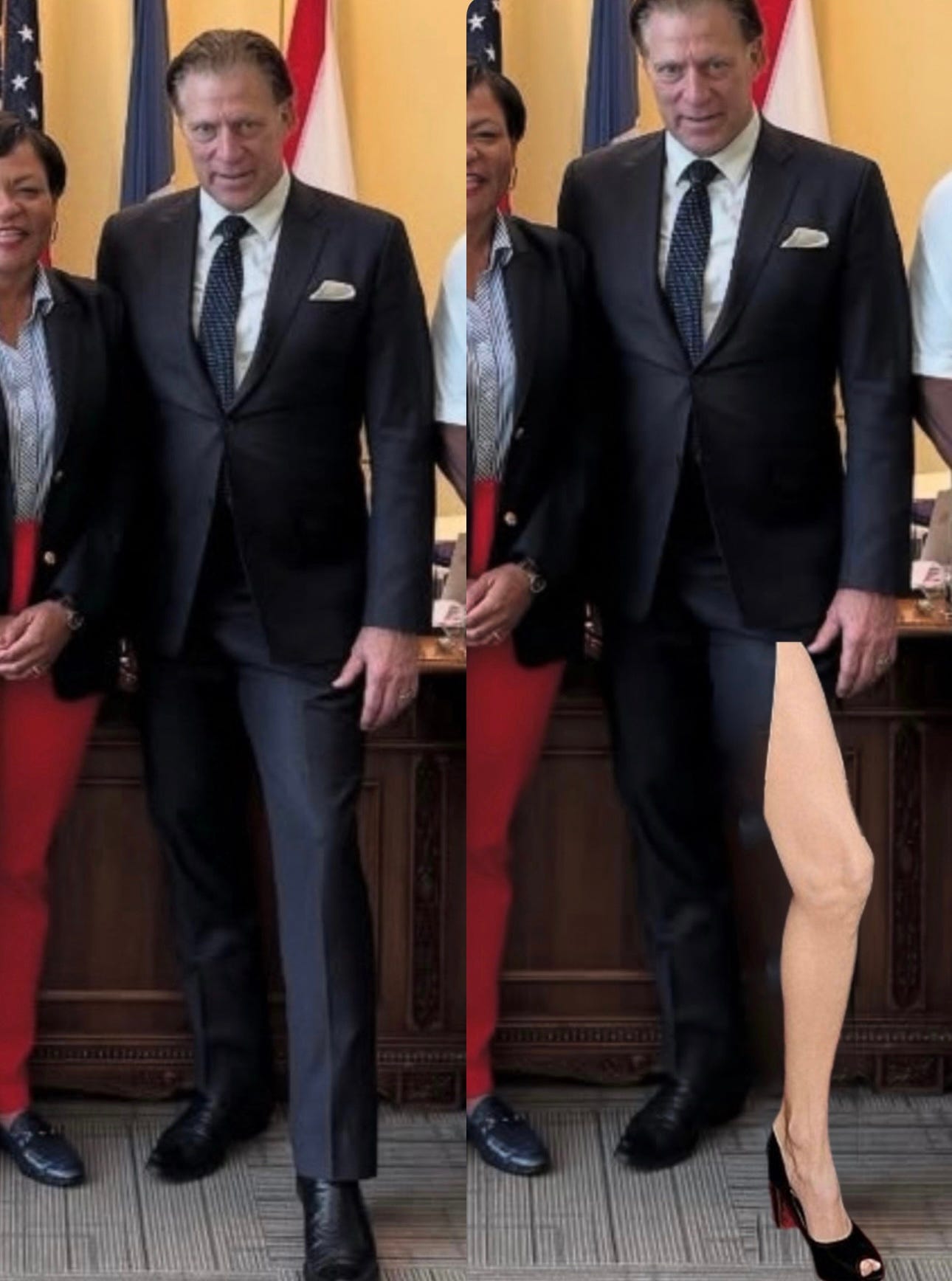
(Incidentally, I have no clue what Mayor Cantrell looks so pleased about in this photo. This man is stealing y’all’s money! Hello??)
It would make sense to just pop on over to Texas after leaving Louisiana, but alas, still no Richardson.
A few days later, on July 12th, he finally turned up in Texas. That is NINE DAYS after the flood began. Nine! DO YOU KNOW HOW LONG NINE DAYS IS???!!!!?! That’s two more days than a WEEK.
Perhaps it just took him a long time to find the flood – Texas is big, apparently!
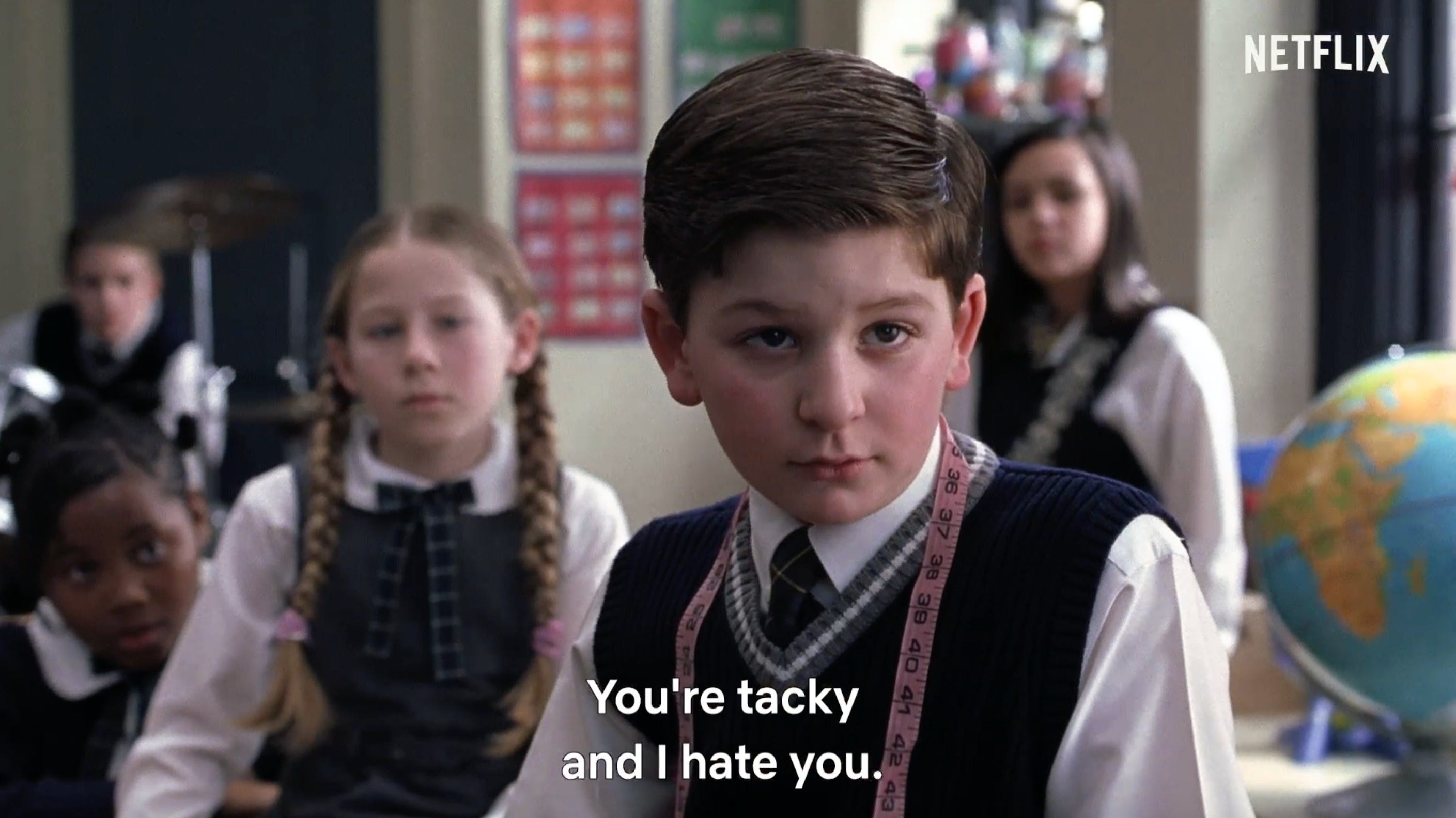
Richardson’s visit appeared to be without substance or assistance; the only thing we can discuss other than his tardiness is his fashion crimes.
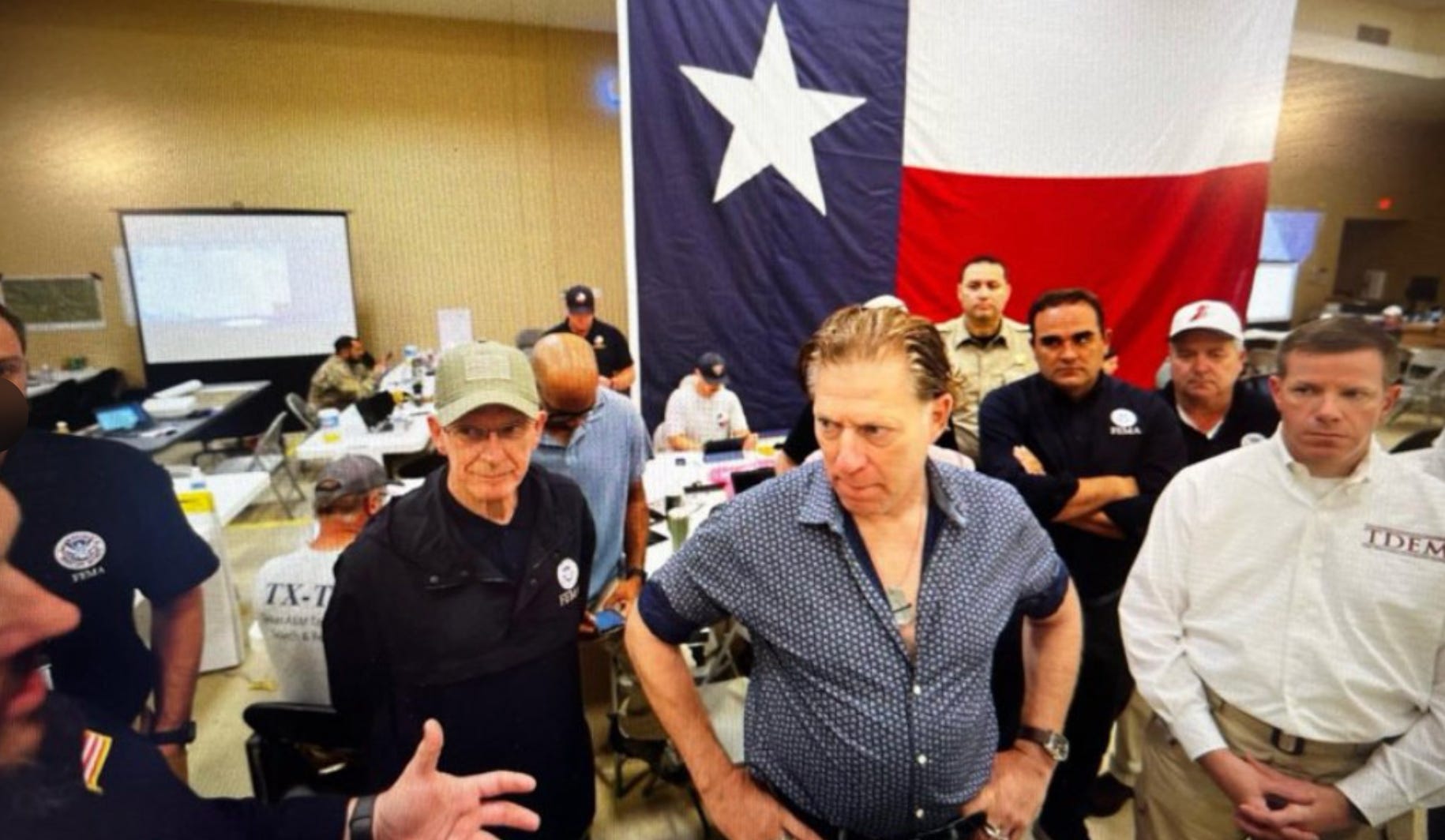
This man rolled in looking like some washed-up mobster coming off a three-day bender at the club. It is giving creepy, old, divorced dad at the bar scamming on young women. This is the wardrobe of the sleezy guy Olivia Benson interviews when a socialite ends up dead. A public service ad for “cover your drink”.
He was wearing what appears to be a Cartier watch and the dumbest hat I have ever seen. I know this is a tired exercise, but can you IMAGINE if Criswell had shown up in Western North Carolina, over a week late, wearing a $7,000 watch? Can you IMAGINE.
I can’t tell exactly what those rings are, but I am worried.
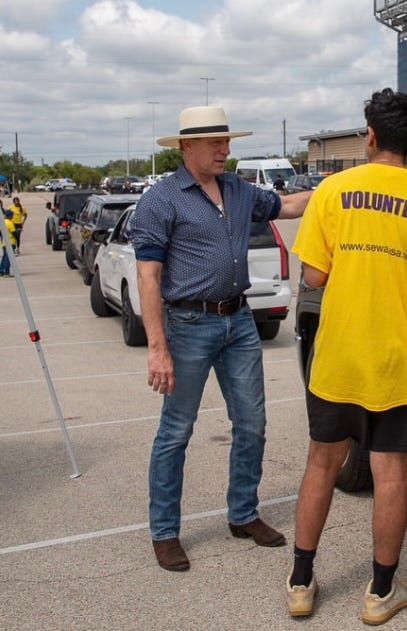
I am obsessed that no one at FEMA gave him a polo. Viva la resistance!
It might seem like I am just being mean, bullying a grown man like this and all, but his fashion choice is actually indicative of all the problems with Richardson serving as the head of FEMA. (Think Miranda Priestly’s Cerulean Sweater Monologue from The Devil Wears Prada.) His actions have demonstrated a complete disregard for the culture of the profession, a lack of respect for disaster victims, and an abdication of duty towards disaster survivors and emergency managers. He has once again demonstrated that he does not take this job seriously and has no interest in bettering FEMA. He is sloppy, unprepared, self-involved, a poor communicator, unperceptive, and ignorant.
Inexplicably, it took days for the media to notice he was missing. Marisa Kabas was the first to report on his peculiar absence in The Handbasket. Other outlets finally followed suit, although certainly not with the fervor the story deserved. This longer bit from Maddow is fine.
As I told Kabas, “It is unprecedented for the leader of FEMA to be absent from the public response to a disaster that has killed over 100 Americans”. I am loath to use “unprecedented”, but I genuinely cannot think of another instance where we did not see the FEMA administrator for over a week after a disaster. Even Michael Brown was still on TV.
His absence is another indicator of how this administration is held to a different standard than all others, how the media (broadly defined) is perpetually falling short of holding them accountable, and how Congress is barely conscious. The lack of consequences here is stunning.
Now, you might argue that, although it is certainly weird to not know where the FEMA administrator is during a disaster, given his complete lack of knowledge of emergency management, does it matter that he wasn’t there? Would Richardson’s presence have made the response in Texas more effective? I doubt it. But also, we are paying him to do a job. He has statutory responsibilities! It’s his responsibility to tell Noem that it can’t take her 72 hours to approve search and rescue teams. It is his responsibility to make sure the head of the USAR branch doesn’t resign in the middle of hurricane season. It is his responsibility to make sure that contracts are signed so there is someone to answer the phone at FEMA. Every indication here is that FEMA was slow at best, and absent at worst. And we know this will be felt more severely in the recovery, as it always is.
We couldn’t trust this man to manage a fruit stand, let alone the safety of the ENTIRE COUNTRY? He is a walking disaster. But, of course, that is why Noem selected him. There is no fear that he might tell Congress that FEMA should continue to exist because this man has never had an original thought in his life. He is there to sign some memos to dismantle FEMA and be the fall guy when they need a fall guy.
We need FEMA to have a competent administrator because what happened in Texas is far from the worst that can happen without one. This is a problem much bigger than Texas.
The thing that those of us in emergency management understand about the disaster in Texas, which journalists and the public have largely missed, is that although there was an exceptionally high death toll, this was a relatively small disaster in terms of geography and total direct impacts. It involved a handful of counties and just one state. They also have a state emergency management agency that is significantly more resourced than almost any other state. That means they were able to compensate for the lack of FEMA support and the lack of local emergency management capacity, and local government incompetence. This same flood in the state of Maine? Forget it.
Nearly a decade ago, I wrote my dissertation on flooding in Texas, and then, as now, what I noticed was that because the state is so well resourced, they have been able to obscure the lack of local emergency management capacity, especially in rural parts of Texas, in a way that other states can’t do. The depth of emergency management capability in Texas isn’t what it appears to be. This is one reason I panic when it is suggested that Texas should be the model for the rest of the country. They are doing some things well, but there is a lot they are not doing well — and a lot they are not doing at all.
In any other administration, Congress would be all over FEMA’s response. Many days into the flooding, and after the media finally picked up on his absence, some democratic members of Congress sent a letter to FEMA. TL;DR: “wtf?”.
On Wednesday, the House Transportation and Infrastructure Committee finally called Richardson in to testify. Reader, it was distressing. Richardson revealed he is a climate denier, pretended to have no knowledge of Kristi Noem’s $100,000 memo, seemingly blatantly lied about the call center contract having lapsed, noted that Texas got the response they deserved, ranted about bike lanes, refused to say whether FEMA should continue to exist, and a host of other asinine things.
I continue to be discouraged by the inability of members of Congress to hold FEMA officials accountable. This is a forever issue, but it’s one with greater consequences today. The majority of members did not know enough about emergency management to even know what questions to ask. There was remarkably little pushback to his answers, and some didn’t even use all of their time! Rep. Shomari Figures had a good line in imagining a future disaster in Alabama: “I don’t want you to be sorry… I want you to be prepared”.
I am glad to see Congress slowly doing the bare minimum in holding a hearing, but it was far too cordial. I don’t know where it got us. By my count, we have seen a grand total of one member of Congress (Rep. Frank Pallone) call for Richardson’s resignation. Just absolutely no sign of life in the Democratic Party.
Perhaps in retrospect, the meaningful takeaway from this hearing was the introduction of a bipartisan bill, “The Fixing Emergency Management for Americans (FEMA) Act of 2025”. It’s 200 pages and includes a lot of changes — some big, like removing FEMA from DHS, some small, like changing how denial letters are written, others that have been promised for a long time, like a streamlined aid application, and others that are little more than grandstanding. It is what you’d expect a bipartisan emergency management reform bill to look like — nothing radical, just the basic changes the field has been asking for over the past two decades, mixed in with a little bit of bullshit. And while there is a tilt towards increasing the state role, this bill assumes that FEMA continues to exist in its pre-Trump form. That is quite curious to me.
This bill feels like a relic from 2024. Can Congress pull this off if they can’t even get the administration to hire a competent FEMA administrator?
In conclusion:
Media Check In…
Congress has defunded NPR and PBS, which is a tremendous problem for emergency management. PBS NewsHour has long produced the best video news coverage on disasters. They tend towards response coverage but also do a significant amount of reporting on mitigation. I use their videos in class all the time. Their Frontline series has produced some of the most timeless disaster documentaries, including: The Storm, The Old Man and The Storm, and Business of Disaster.
NPR does good disaster coverage generally, too, but it’s their local affiliates that are pretty single-handedly covering long-term recovery and doing disaster accountability journalism. Vermont Public stands out for its coverage of recovery/mitigation from the numerous flood events, and Blue Ridge Public Radio has been a lifeline since Helene.
I am thrilled to see that donations to NPR and PBS are surging. It’s not enough to make up for what was cut, though. If you can provide support – especially to your local NPR affiliates – I think that is a way to support emergency management right now.
I also wanted to share this new Disaster 101 resource from Grist that covers some of the most FAQs about disasters, such as how to find housing post-disaster, how disaster response works, and immigrant rights during disasters.
“I Object!”
You’ll remember back in April, the Trump administration announced they would be canceling all BRIC funding for 2020-2023. This program primarily funds mitigation projects across the country and is a big fucking deal. This meant communities across the country lost millions and millions and millions of dollars for projects that, in some cases, were underway.
The good news is that 20 states have decided to fight for their BRIC funding. Andrew Rumbach has a good overview. It’s the 20 states you think it is, which is frustrating given that 2/3 of the counties that lost BRIC funding voted for Trump in 2024. Politics, baby!
The End Bits
It’d be cool if you forwarded this newsletter to your friends, post it on social media, or undertake any other form of newsletter sharing you deem appropriate. I’ve heard some of you print out the memes to hang in your emergency management offices! Incredible.
In case you signed up for this newsletter without knowing who I am (a bold choice!), you can listen to this interview with me on Ologies. If you really want to dive in, you can read my book Disasterology: Dispatches From The Frontlines of The Climate Crisis to catch up (here’s a USA Today review). You can order it here and get it as an audiobook here.
Other places to find me: Blog. BlueSky. Instagram. TikTok.
This newsletter can be accessed for free, and I intend to keep it that way because eliminating barriers to disaster knowledge is important. However, there is a “paid subscriber” option for $5 a month, or whatever you’d like to give if you’re interested in supporting this work.
You are awesome, Samantha!